Closer than you think. A Japanese macaque (also known as a snow monkey) grooming in the thermal springs of Jigokudani, high in the Japanese Alps..

A pensive snow monkey enjoying a bath in the hot springs. The pool at Jigokudani was specially built for them after they started using the outdoor bathing facilities (onsen) at a local guesthouse. They are now a major tourist attraction, their presence encouraged and maintained by regular feeding by park managers.

A rhesus macaque being hand-fed a mixture of milk, bread and banana by a Hindu devotee in Jaipur, India. Monkeys are respected for their part in a legendary battle against a demon king, and so are fed in gratitude.
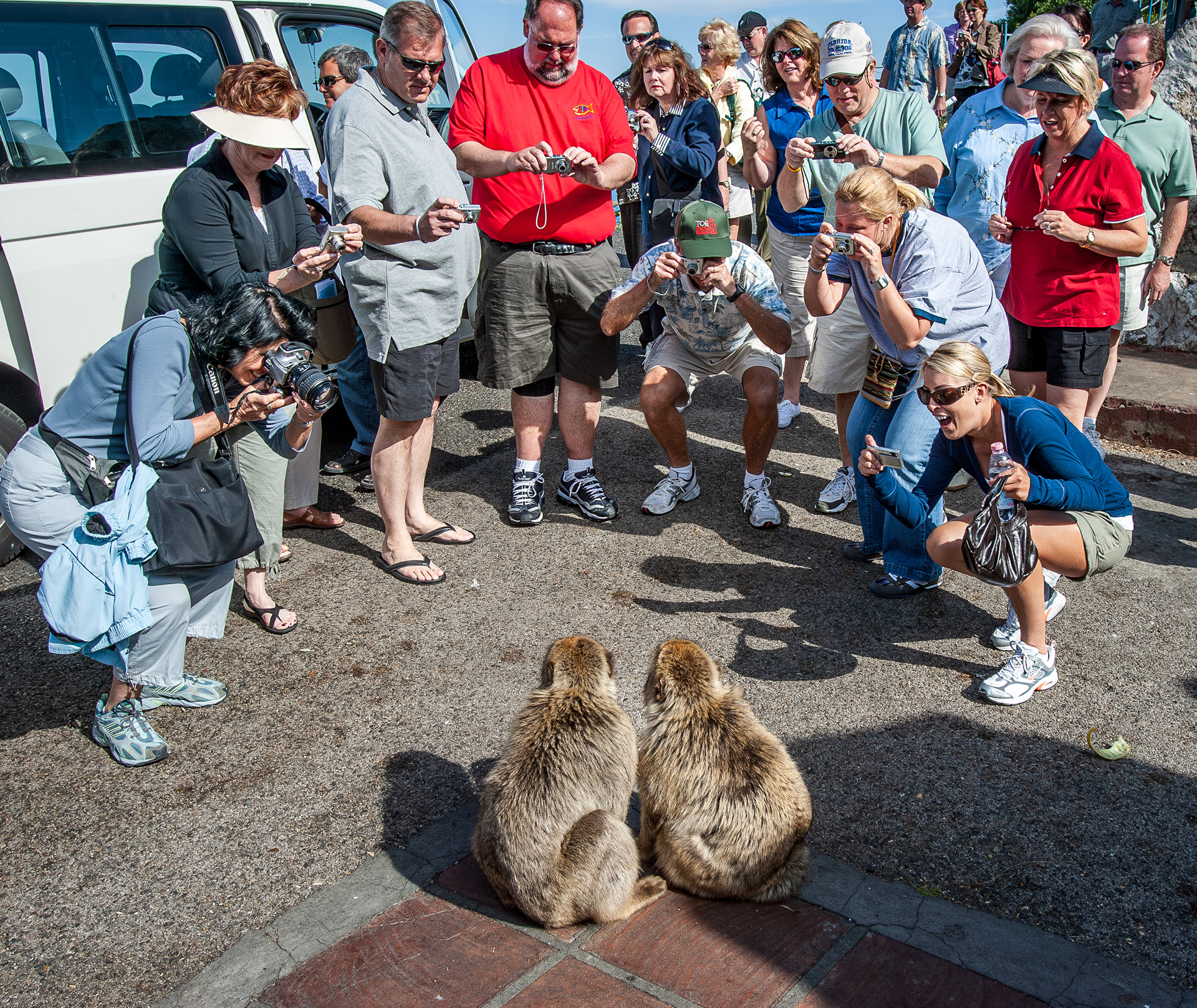
Often called "rock apes," the Barbary macaques are an iconic, if misnamed, fixture of life in Gibraltar. Likely introduced as curiosities, their presence is tied to a local legend: as long as the macaques remain, so does British rule. To satisfy the tourist demand this creates, the monkeys are lured to roadside feeding stations, allowing tour guides to "tick them off" with ease. However, this artificial feeding habit breeds internal stress and aggression within troops, while the constant, unregulated proximity to crowds keeps the monkeys in a state of perpetual tension.

Three relaxed snow monkeys in a hot spring. Mutual grooming relieves stress and reinforces bonds between troop members. At Jigokudani their food is scattered over a wide area, reducing conflict between individuals.

There are signs warning visitors not to feed the macaques on Gibraltar. Taxi drivers rely on good relationships with them to enable photo opportunities.
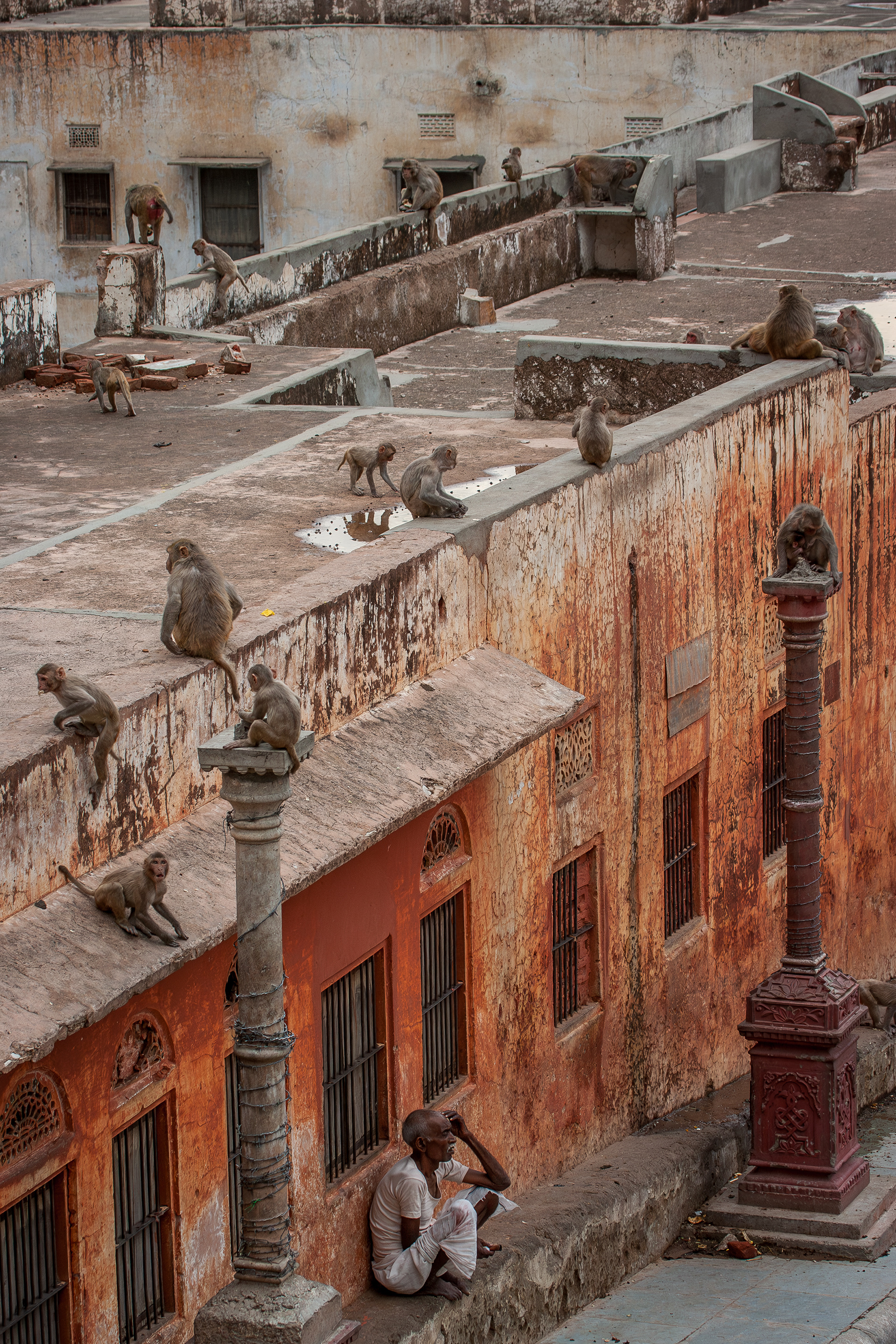
Macaques roam the streets and rooftops of Jaipur, and sometimes there are conflicts with the dense human population. While neighbouring states have adopted more aggressive measures, Rajasthan maintains a gentler policy, prioritising non-lethal deterrents and strategic relocation over more heavy-handed interventions.

A young macaque, resident of the "pink city" of Jaipur.
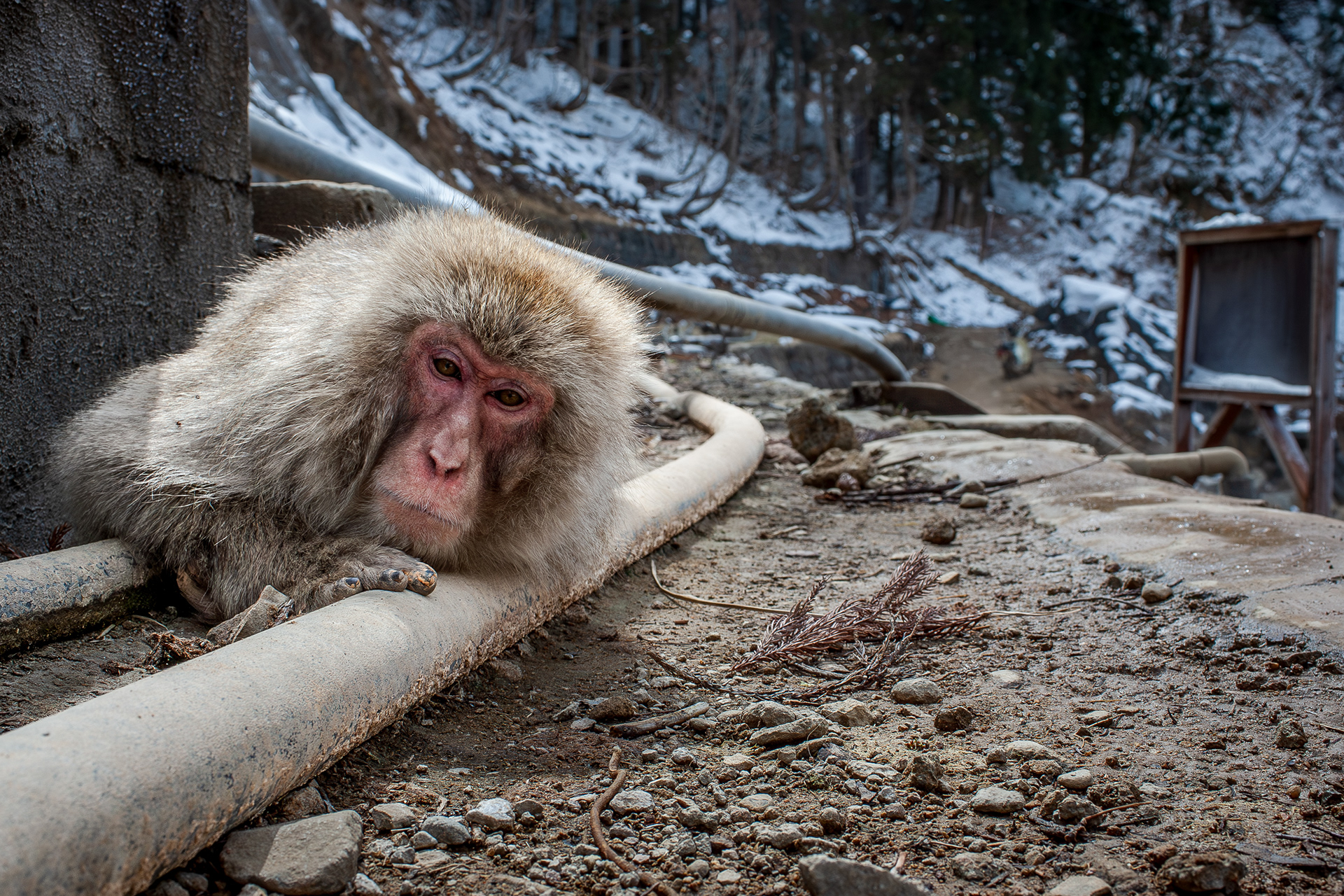
A pipe carrying hot water from the thermal spring to a nearby ryokan makes a good winter warmer for a solitary snow monkey.

Tourists meeting a local inhabitant on the Gibraltar cable car.

Water Fight. Two young rhesus macaques squabble over a leaking tap on the outskirts of Jaipur city. Highly Commended in the NHM Wildlife Photographer of the Year competition.

With food in plentiful supply and the thermal bath keeping the freezing temperatures at bay, there's nothing for a Japanese macaque to do except relax. As long as you're part of the inner circle, that is. The thermal pool is prime real estate, and is only accessible to the highest ranking members of the troop.

A juvenile macaque’s 1963 dip in a ryokan's hot spring—initially to retrieve food—created a macaque culture. Her discovery of the benefits of warm water bathing was quickly imitated by the troop, leading to the establishment of the Jigokudani Monkey Park, where snow monkeys have bathed in their own dedicated pools ever since. Except this one, who didn't get the memo.
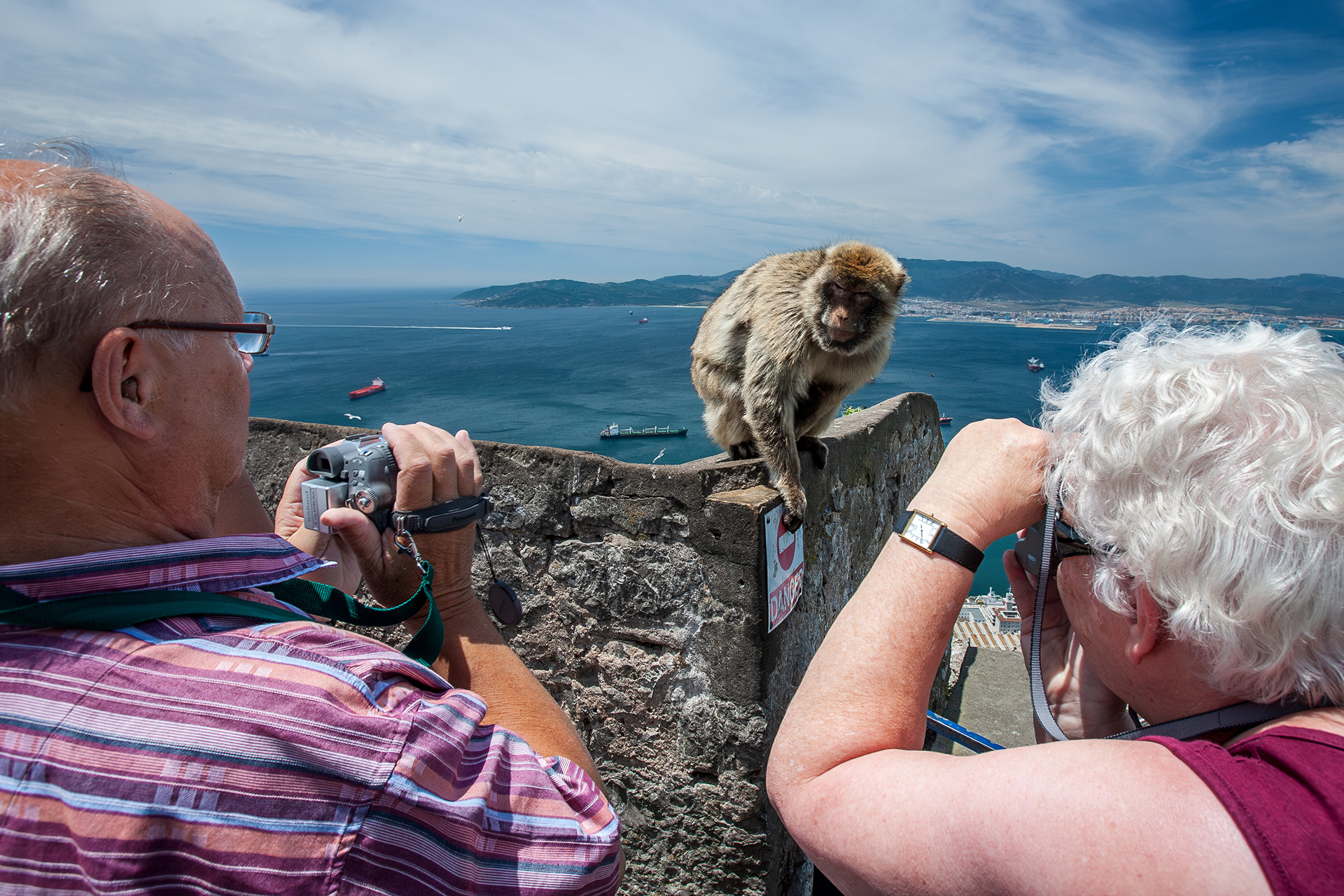
A little cultural knowledge goes a long way in avoiding conflict. Most visitors fail to realise that for a macaque, a steady gaze is a threat, frequently resulting in an immediate and aggressive retaliation.
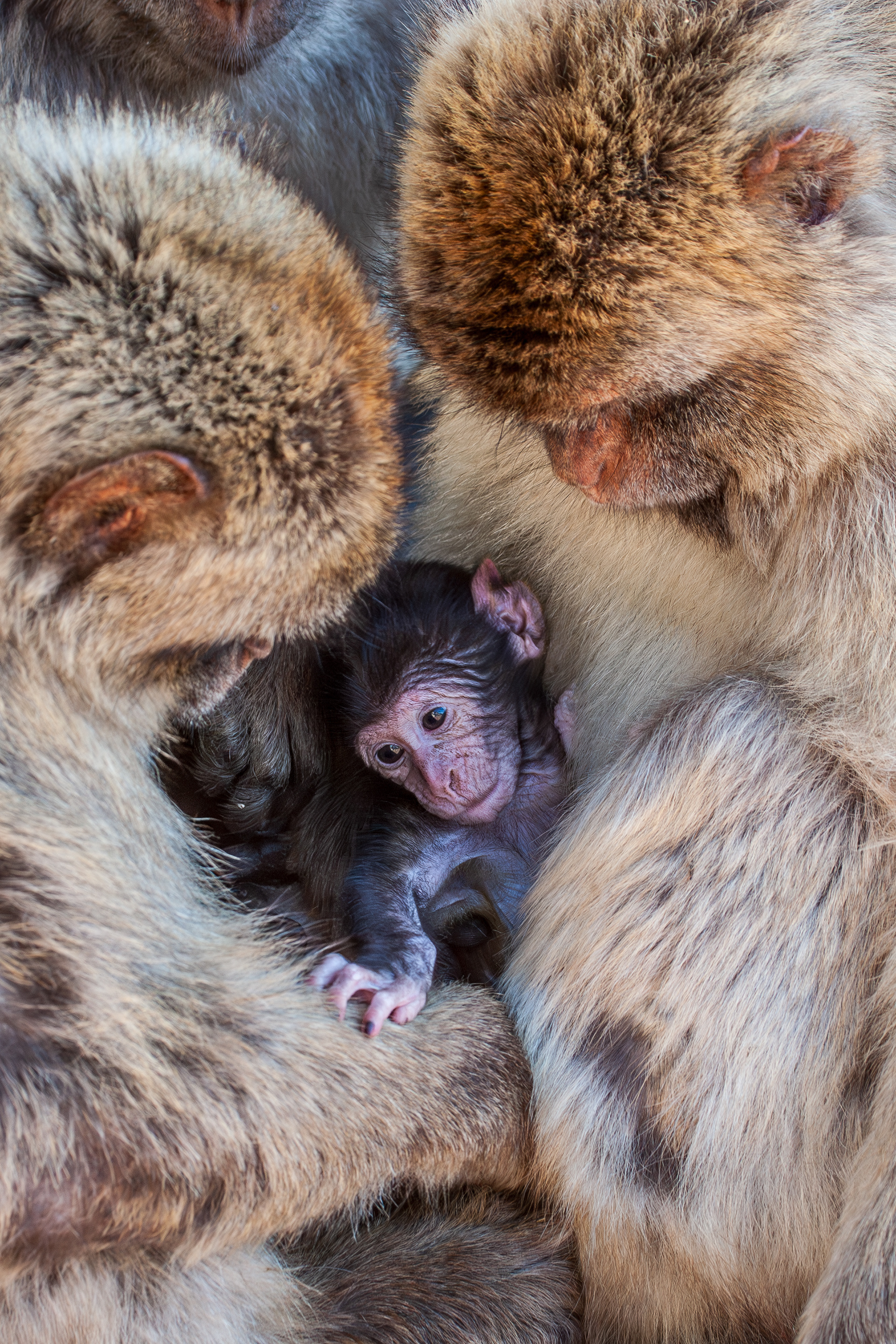
An infant Barbary macaque at the centre of attention from a group of adults.

A Japanese macaque in profile.

A Jaipur man hand-feeding a group of rhesus macaques. This is at Galtaji gate, at the edge of the city and on the way to Galwar Bagh, sometimes called the Monkey Temple.
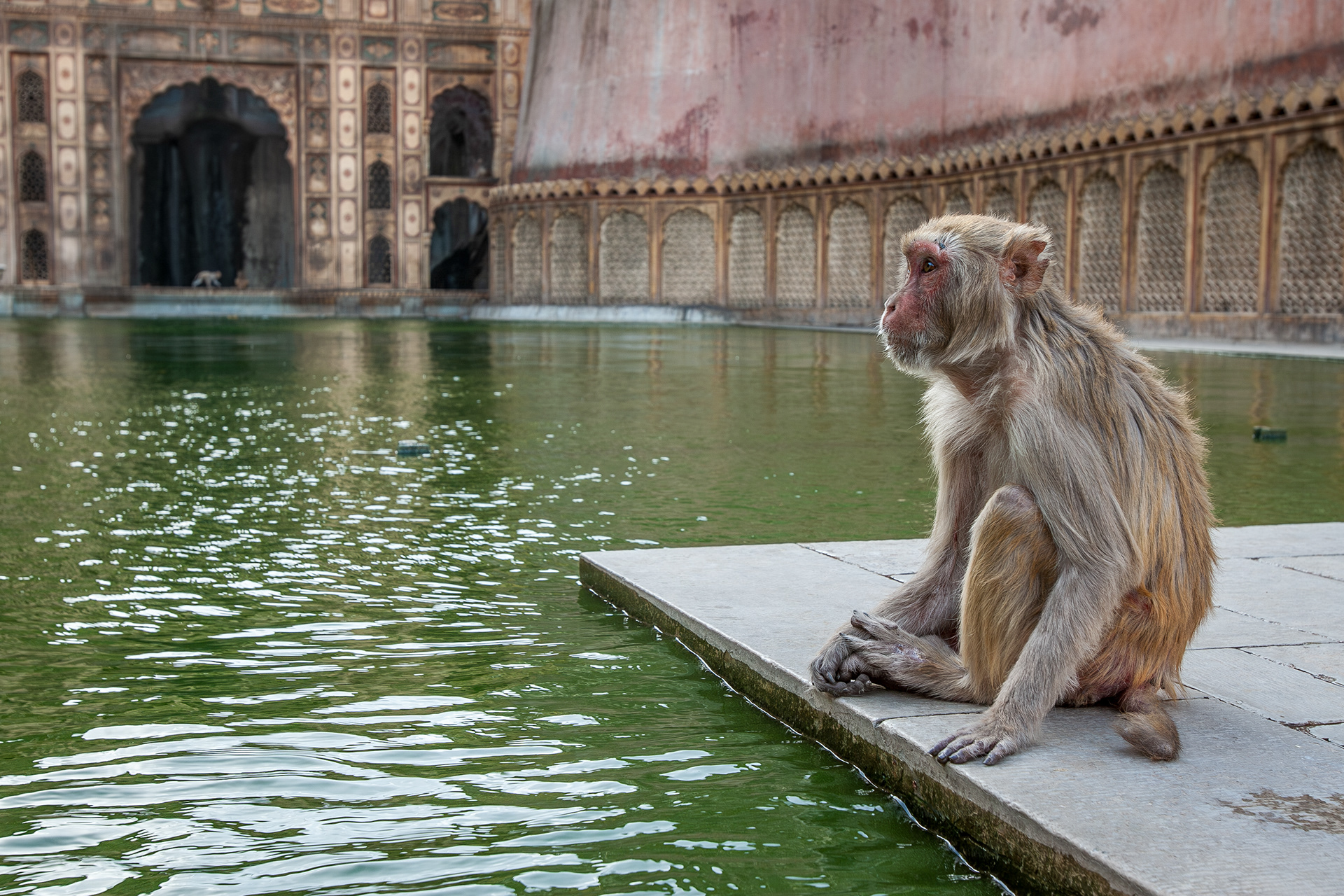
The macaques have one of the seven bathing pools at Galwar Bagh reserved for their use.
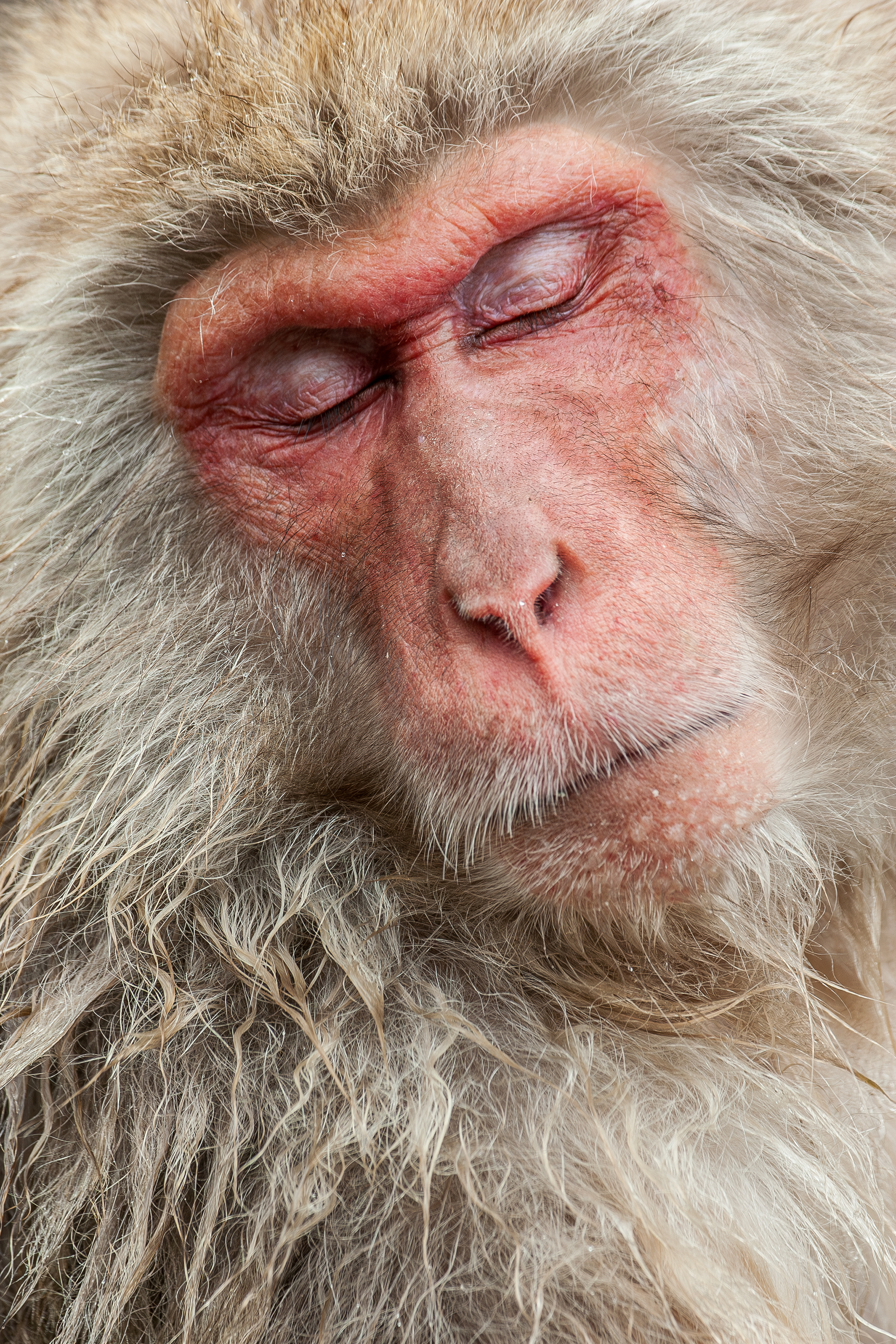
Happiness is a warm bath.

With each generation, the lives of humans and macaques become increasingly intertwined. Like us, they are adaptable, resourceful survivors navigating a complex world; learning to coexist will enrich the lives of both species.